
CranioSacral Therapy and Touch of Presence
Reconnect with your own inherent health and
find calm amidst the ebbs and flows of life.
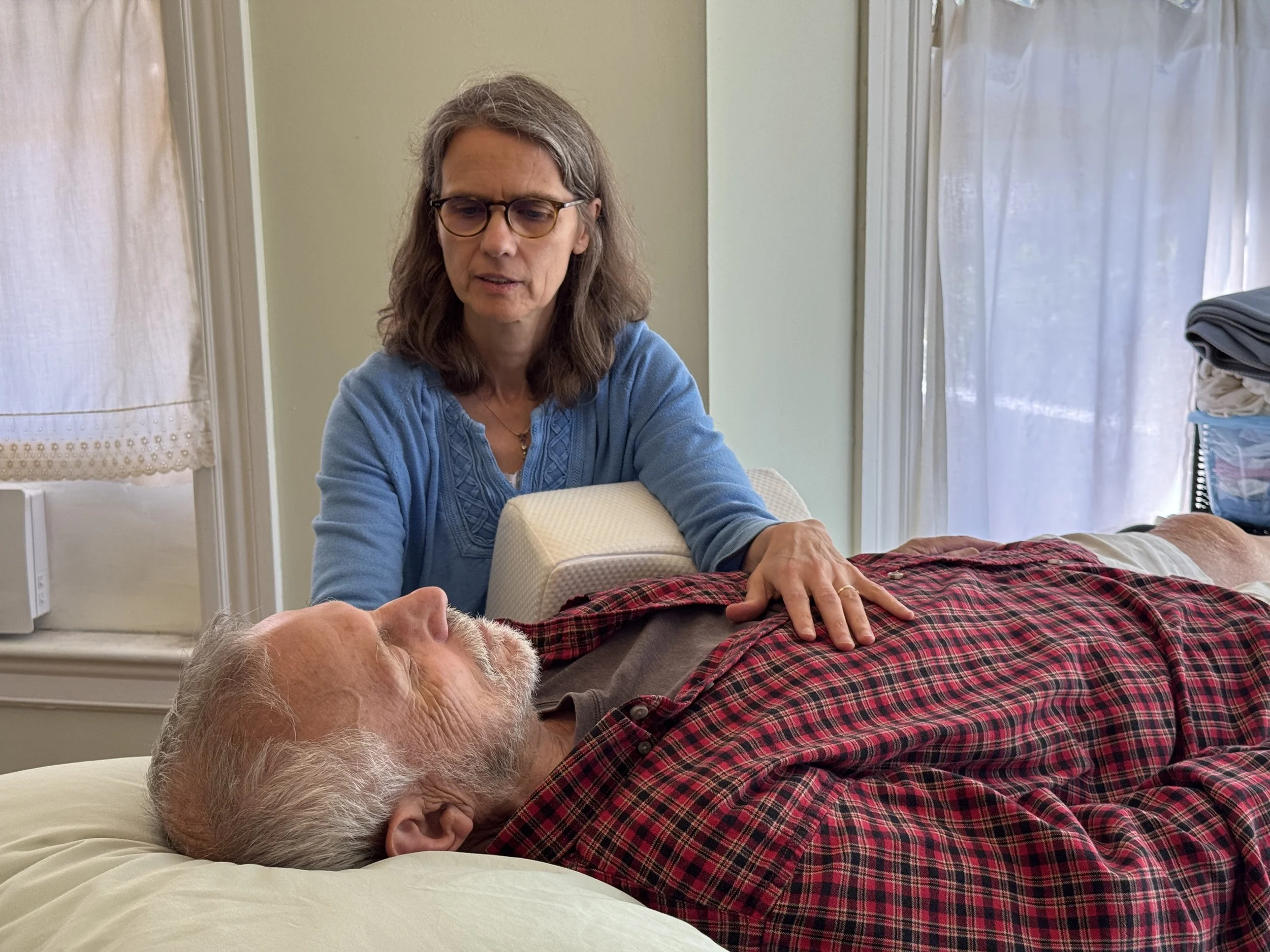

What ARE CranioSacral Therapy AND TOUCH OF PRESENCE?
CST and Touch of Presence are gentle, clothed, hand-on forms of body work. These practices can help regulate the nervous system, release potency trapped due to physical, spiritual or emotional injury, and improve our overall sense of well-being. I have studied functional as well as biodynamic approaches for CST which can include the use of technique.
Touch of Presence, as taught by Giorgia Milne, is a sublime biodynamic meditative approach which connects us with the deeper forces of life that create and sustain life within us and around us even more profoundly. This is deep and slow “yin” work outside of “fix it” mind which supports our body’s own inherent blueprint for health. Very deep shifts may occur without the use of technique. I find that this approach opens us to the physical experience of non-duality of which mystics across spiritual traditions have spoken for centuries. For more specific information on the origins of craniosacral work and my teachers, click here.
Craniosacral Therapy (CST)
I originally studied more a more functional approach of CST using more active techniques to address issues such as back pain, headaches, teeth grinding, sleep issues, digestive issues, hormonal imbalances, chronic pain, tensions held from trauma and to offer general support of a client’s overall vitality during times of illness or recovery. I have also studied biodynamic approaches which work more on the deeper level of fluids and tissue fields in the body in sync with universal tidal rhythms that are expressing themselves in the body.
CST can be quite effective in calming and resourcing the nervous system. People often comment that they feel more at home in their own being and bodies after experiencing CST. This work can also be very effective for working with babies who can experience compressive forces while in the womb and especially during the birth process.
I recently completed a basic and an advanced course in gynecology to assist women in dealing with physiological (uterus, bladder, ovaries, emotional and hormonal challenges throughout the life cycle
which approach is for me?
Touch of Presence - Biodynamic Cranial Approach
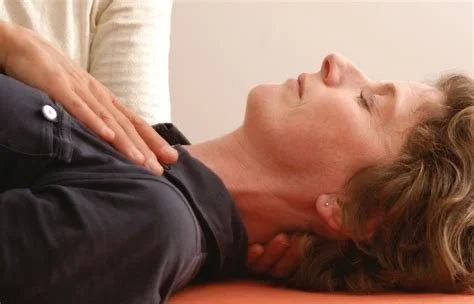
This approach can positively engage all the issues listed under CST without the use of diagnosis or technique. It is based on the later teachings of the founder of craniosacral work, Dr. William Garner Sutherland. Touch of Presence, as taught by Giorgia Milne, can be particularly powerful in helping us reconnect to a sense of wholeness, our own inherent blueprint for health, and the sense that the forces which have brought us into being still sustain and heal us. Rather than focus on the separate parts/systems of the body and the phenomena which arise (i.e. pain or particular movements), we orient toward a much wider field and sense of presence and belonging. It is slow and deep work calling for trust and wholesome surrender. You may experience your being in a more fluid, alive, vibrational field beyond the sense of separation.
What to Expect
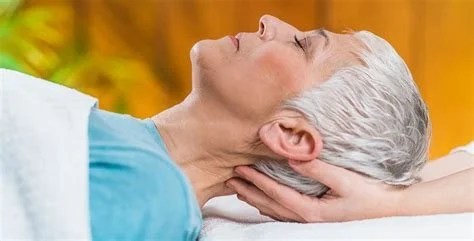

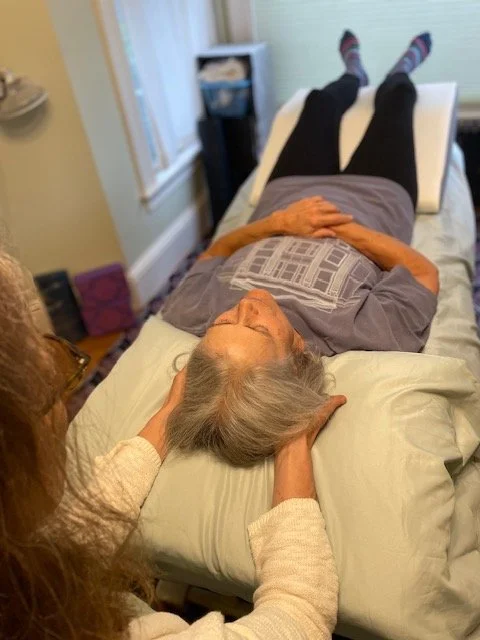
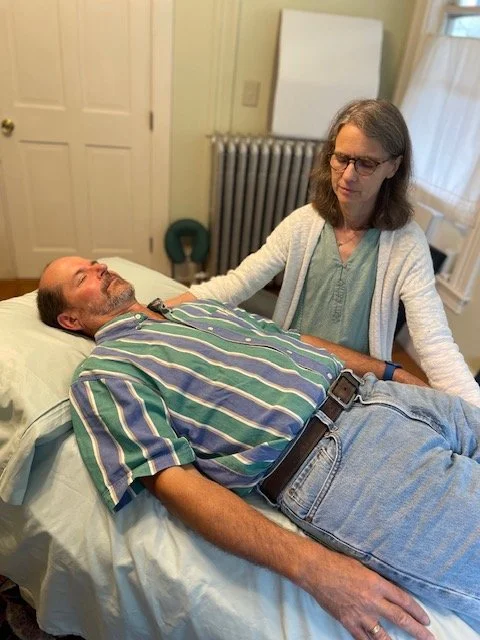
We will begin with a check-in. If you are coming in for the first time, we will go over your intake form and I will also ask you to sign a consent form. Together, we will note any areas of concern, discuss what your intentions are for the session and take time to answer any questions you may have. We can discern together which approach (functional or biodynamic) you would like to work with. You will lie down, fully clothed, on a cushioned massage table. We will make sure that you have all the supports you need to rest comfortably. I will invite you to always speak up if anything during the session feels uncomfortable or if strong emotions arise. I aspire to make sure that you feel safe, resourced and supported throughout the process and am a trauma sensitive practitioner. We will negotiate touch together. We may a do a short, guided mediation to ground us.
Sessions last 60 or 90 minutes.
Testimonials
“Looking for a word and what comes to mind/body is sublime. Yes, a sublime healing experience….I feel kind of all attached, connected.”
- Roger L., Camden
I have been working with Ute Molitor through the summer and find these sessions life-giving in ways that are perhaps difficult to quantify but are palpable. It feels as if Ute aligns her own spirit with her sense of my body's status, usually beginning with the feet. Both of us enter a meditative state that is restful and relaxing but the sense of change and healing in my body is a vital thing, as if currents of energy were opened. Sometimes it involves a palpable shifting within my head, feet, hips, or shoulders, depending on her focus. This is an entirely different experience than massage, exercise, or other more dynamic interventions. It feels mutual and participatory, but extremely gentle.
- Holly A., Cushing
“Ute has experience and skills, clarity and an open heart, which facilitates healing with awareness and loving care. My experience with her has been powerful and transformative.”
- Rose W., Rockland
I felt such a difference in my stomach after the session. It really felt like things were reorganizing in my stomach and in the evening I had much less cramping, bloating, etc.
- Sarah T.
I didn't know what to expect when I signed up for Craniosacral Work with Ute Molitor. When she asked what my intention for the time was, it came to me. I said I wanted to feel spacious. Ute's light touch and the extended quiet time indeed gave me a feeling of spaciousness and calm.
- Ellen G., Cushing
"Ute's gentle touch, her caring and compassionate heart, and her deep faith and trust in the goodness and love of the Universe allows the space for healing of body, mind, and spirit to unfold."
Sarah D., Camden
A bit of history & an introduction to my teachers
Craniosacral Therapy (CST) has its origins in Osteopathy. The founder of osteopathy was Dr. Andrew Taylor Sills who initially learned from Native American bone setters. His student, William Garner Sutherland, developed Craniosacral Therapy. He initially noticed that the bones of the skull are designed as if to allow for respiration/movement. He began a long journey of investigation and experimentation to see whether restrictions on any of the bones and their internal relationships could cause problems. He eventually discovered that there are tidal movements expressing in our bodies and noted the importance of the unimpeded rhythmic flow of the cerebrospinal fluid which nurtures especially our brains and spinal cord. This fluid contains light photons and pulses. One can perceive a rising and swelling toward the head (cranium) and then a receding to the sacrum at the base of the spine. In slower expressions of the tide, the body is perceived as a whole living fluid field.
The practitioner can attune to these rhythms and how they express in the body’s fluids and tissues but also the deep stillness that can arise during a session. It is in the stillness that the body can existentially reconnect with its own inherent health and potency. Places where this potency is trapped due to injury or other impacts on our system often resolve themselves in the process.
The longer Sutherland taught and practiced, the less he came to rely on techniques and focused more on the expression of what he came to call the “Breath of Life” which arises out of a deep dynamic stillness which originates from the pure ground of being. He eventually emphasized stillness and non-doing while being attuned and surrendered to the healing presence and work of the source of life.
I originally studied a more “functional” and “biomechanical” technical approach to CST focusing on imbalances in the structures and tissues of the body. This can be very effective. My main first teacher, Hugh Milne, additionally placed an emphasis on intuitively listening for the underlying stories and archetypes which can shape our embodied experience. Most recently, I have taken a basic and advanced course in gynecology with Milne Institute teacher and Swiss osteopath, Joelle Voruz. This is has opened my eyes to working with women who are dealing into the manifold physiological, hormonal and emotional challenges which arise throughout the life cycle. I have also taken several “biodynamic” courses with Michael Kern in which the focus is more on the deeper tides and the expression of fluids and tissues.
Most recently, I have graduated from a “Touch of Presence” intensive training—a biodynamically oriented approach taught by Giorgia Milne which builds on the later teachings of Sutherland. She places an emphasis on the notion that we are always a complete functioning whole with an inherent blueprint for health from the time we are conceived. The practitioner does not diagnose per se but holds a wide perceptual field oriented to the forces which create and sustain us and continue to influence our development and health. When our system can settle into stillness, the “breath of life” will manifest which areas of imbalance are ready to resolve. Dr. Rollin Becker, student of Sutherland and one of the fathers of biodynamic work, used to thank his clients for letting him watch them heal themselves.